
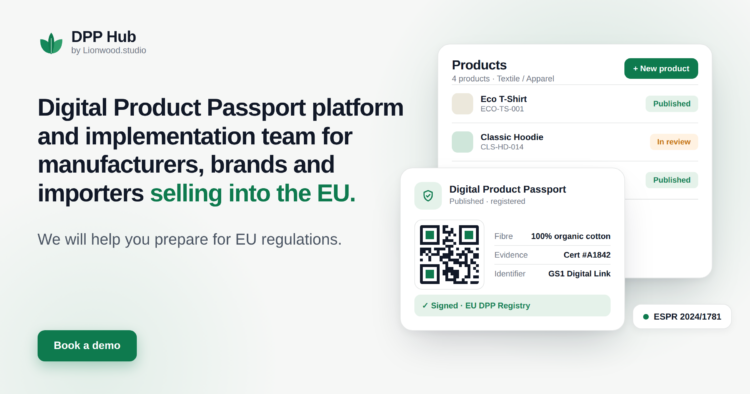
Lionwood Studio has developed DPP Hub, a platform designed to help manufacturers organise product data and documentation and publish Digital Product Passports. The platform brings these tasks into a structured process as companies prepare for upcoming EU requirements.
According to Lionwood Studio, manufacturers can use DPP Hub to create public product passports and share them through a public URL or QR code. The aim is to make product information easier to manage and access.
Product data and documentation in one process
Preparing a product passport requires companies to organise the information associated with their products. DPP Hub is designed to support this work by bringing product data and documentation into one structured process.
The platform’s public passports provide a way to share product information with people outside the company. A URL or QR code directs users to the published passport.
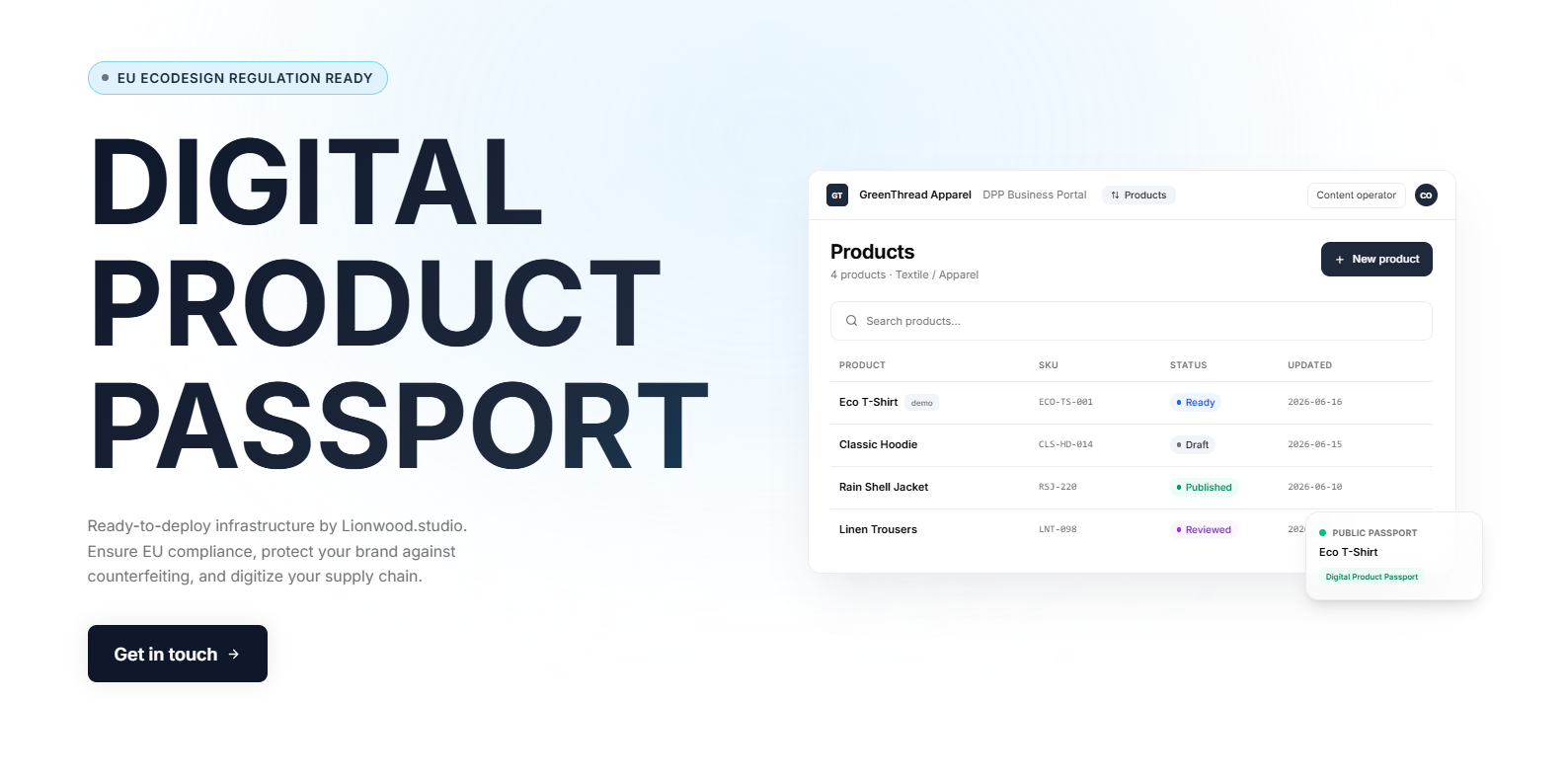
View from the Lionwood Software’s page that introduces Digital Product Passport.
Battery passport requirements begin in February 2027
The EU’s Batteries Regulation introduces mandatory battery passports from 18 February 2027 for electric vehicle batteries, light means of transport batteries and industrial batteries with a capacity greater than 2 kWh placed on the market or put into service.
This is a deadline for the specified battery categories, rather than a general deadline covering all manufactured products. The regulation requires battery passports to contain both model-level and individual battery information, with different access rights for different types of data.
Lionwood Studio positions DPP Hub as a tool for manufacturers preparing for the evolving regulatory landscape, starting with the practical work of organising product information and making it accessible.
Regulatory source: EU Batteries Regulation, Article 77.